American Morse vs International Morse: What Changed and Why
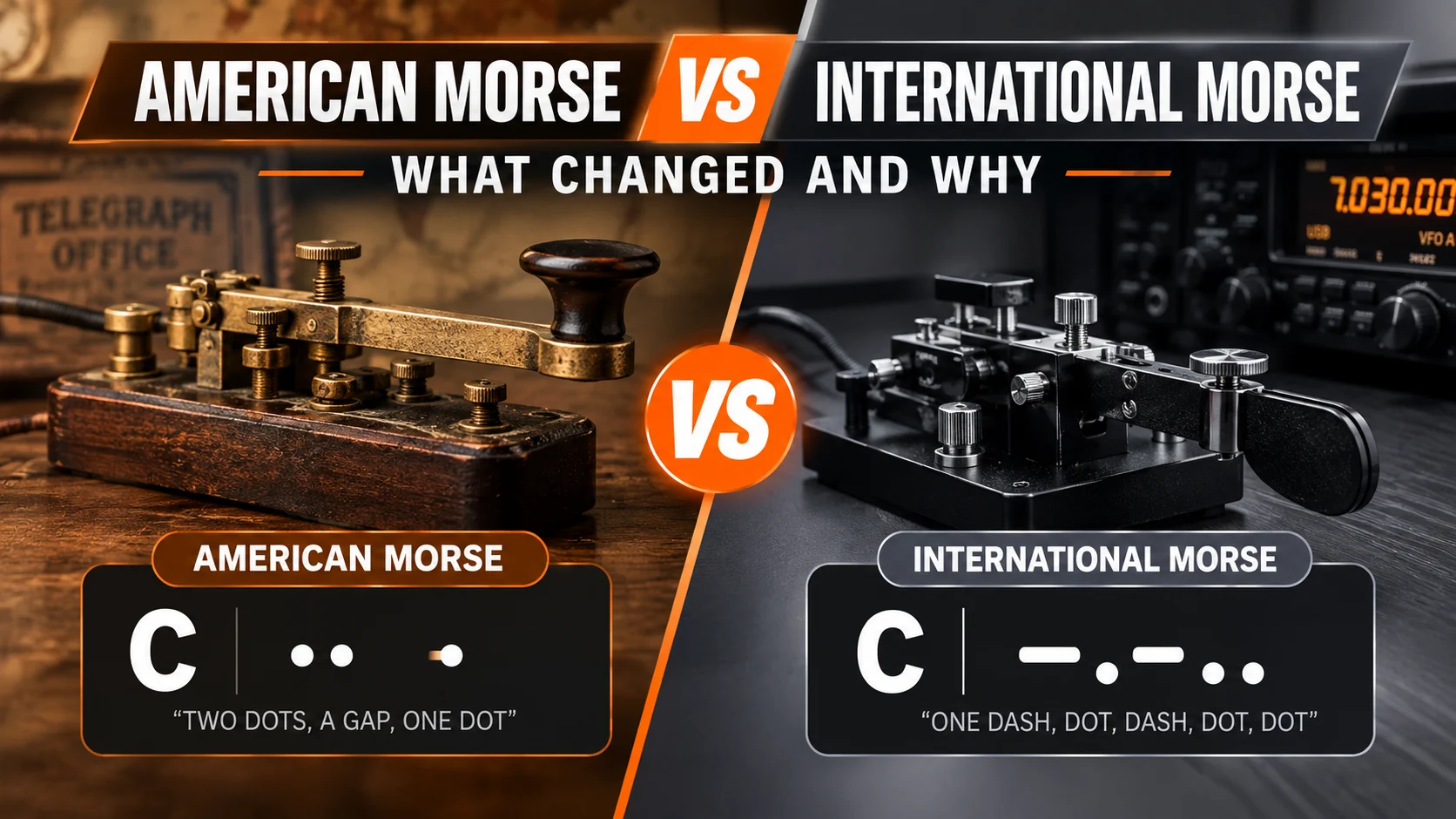
Side-by-side comparison of American Morse code and International Morse code letter patterns

Pull up a scan of a Civil War field telegram or a railroad train order from the 1890s and try to read it with a modern Morse chart. It falls apart within a word. The letter O is two dots. L is one enormous dash. Some characters look like they have a gap punched through … Read more
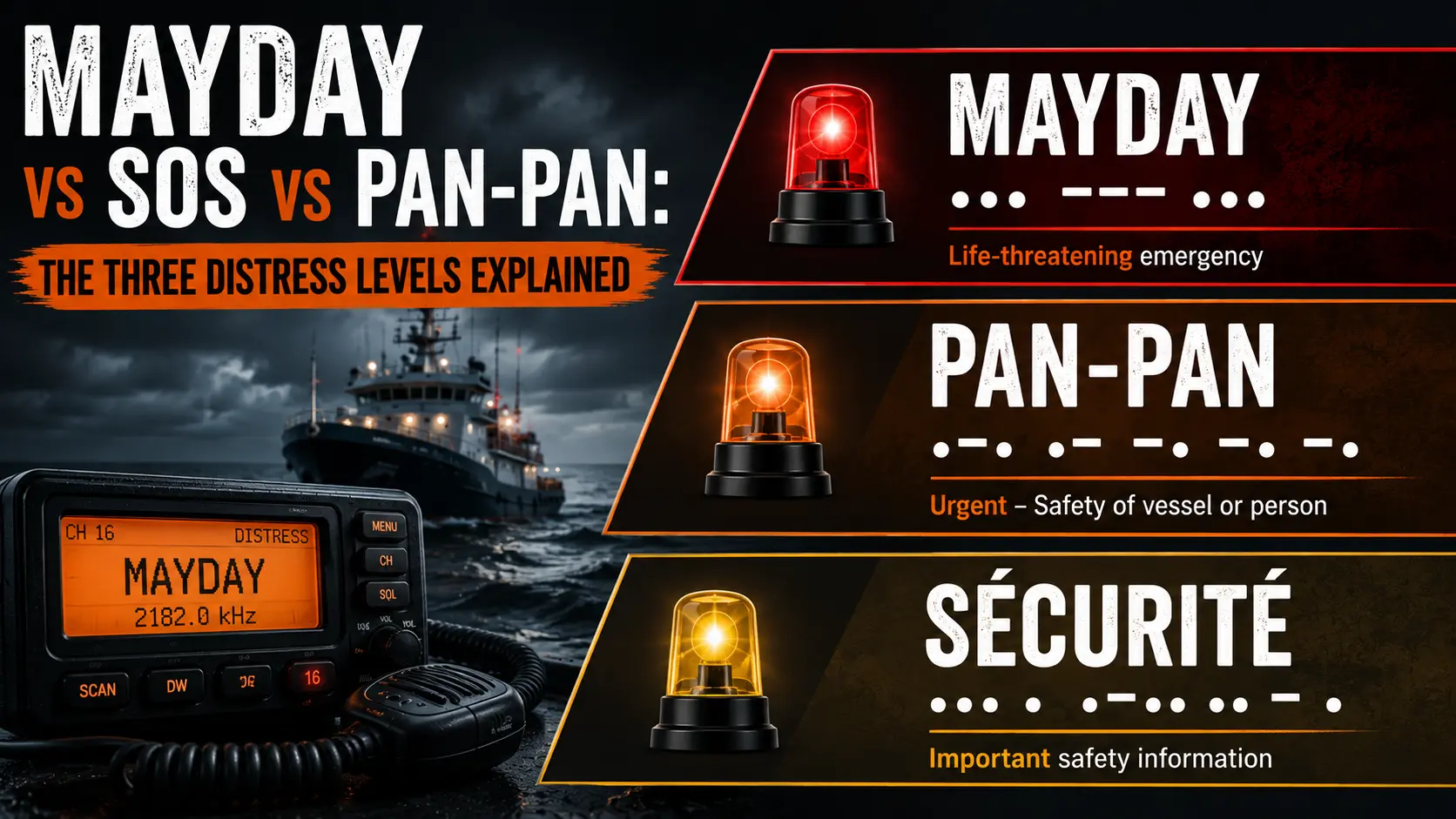
Mayday vs SOS vs Pan-Pan: The Three Distress Levels Explained

Mayday vs SOS vs Pan-Pan distress signal comparison

In the movies, Mayday, SOS and Pan-Pan get used interchangeably, usually by someone shouting into a handset. On a real radio they are three different instructions to everyone listening, and picking the wrong one either launches a helicopter you did not need or fails to get you the response you did. Two of them mean … Read more

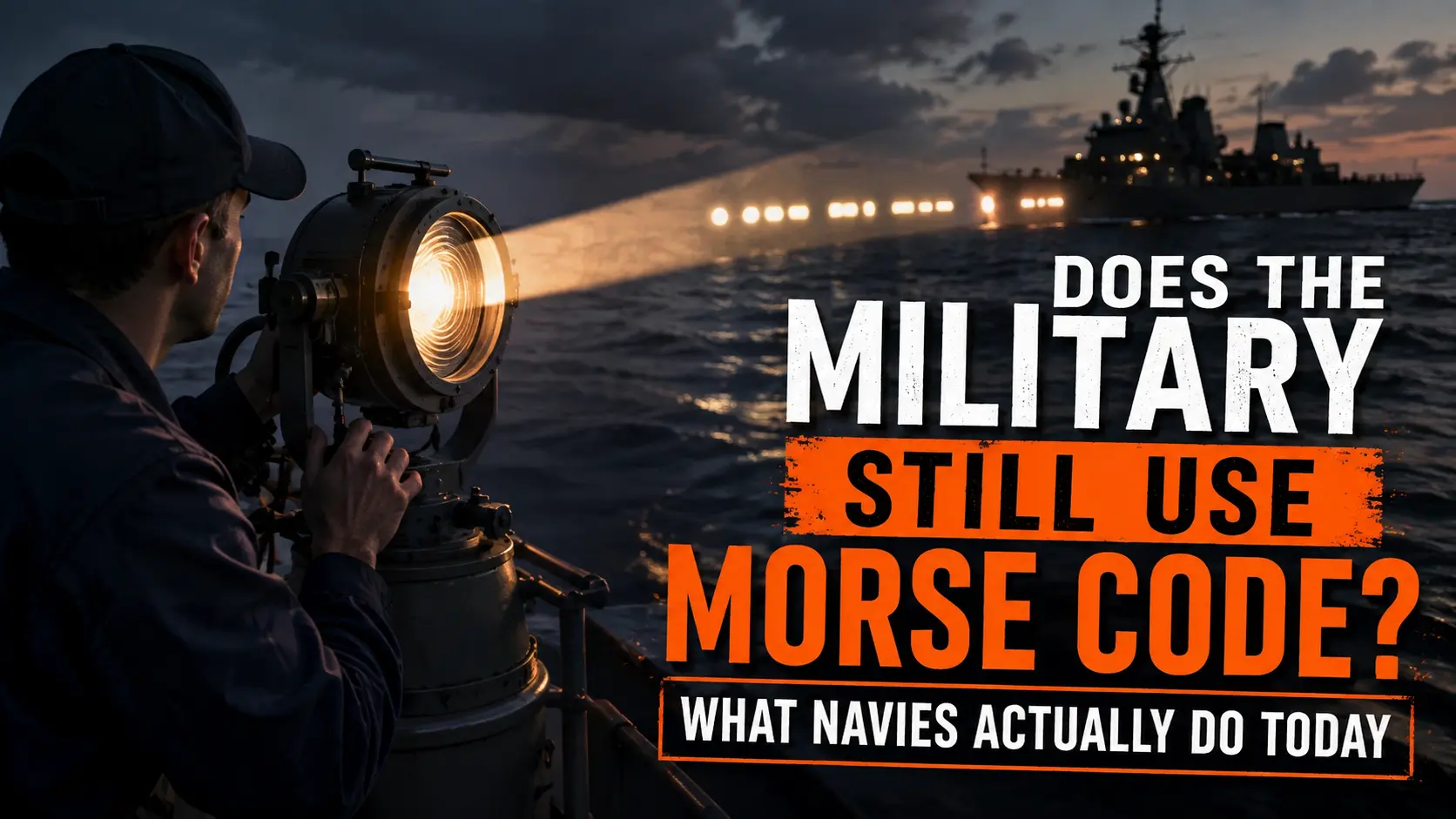
Does the Military Still Use Morse Code? What Navies Actually Do Today

US Navy signal lamp flashing Morse code between ships at sea

Ask whether the military still uses Morse code and you get two wrong answers online. One says it vanished decades ago. The other says special forces still send secret, encrypted Morse over the radio. Neither is right. Morse does still have a real military job, but a narrow and specific one, and it has nothing … Read more

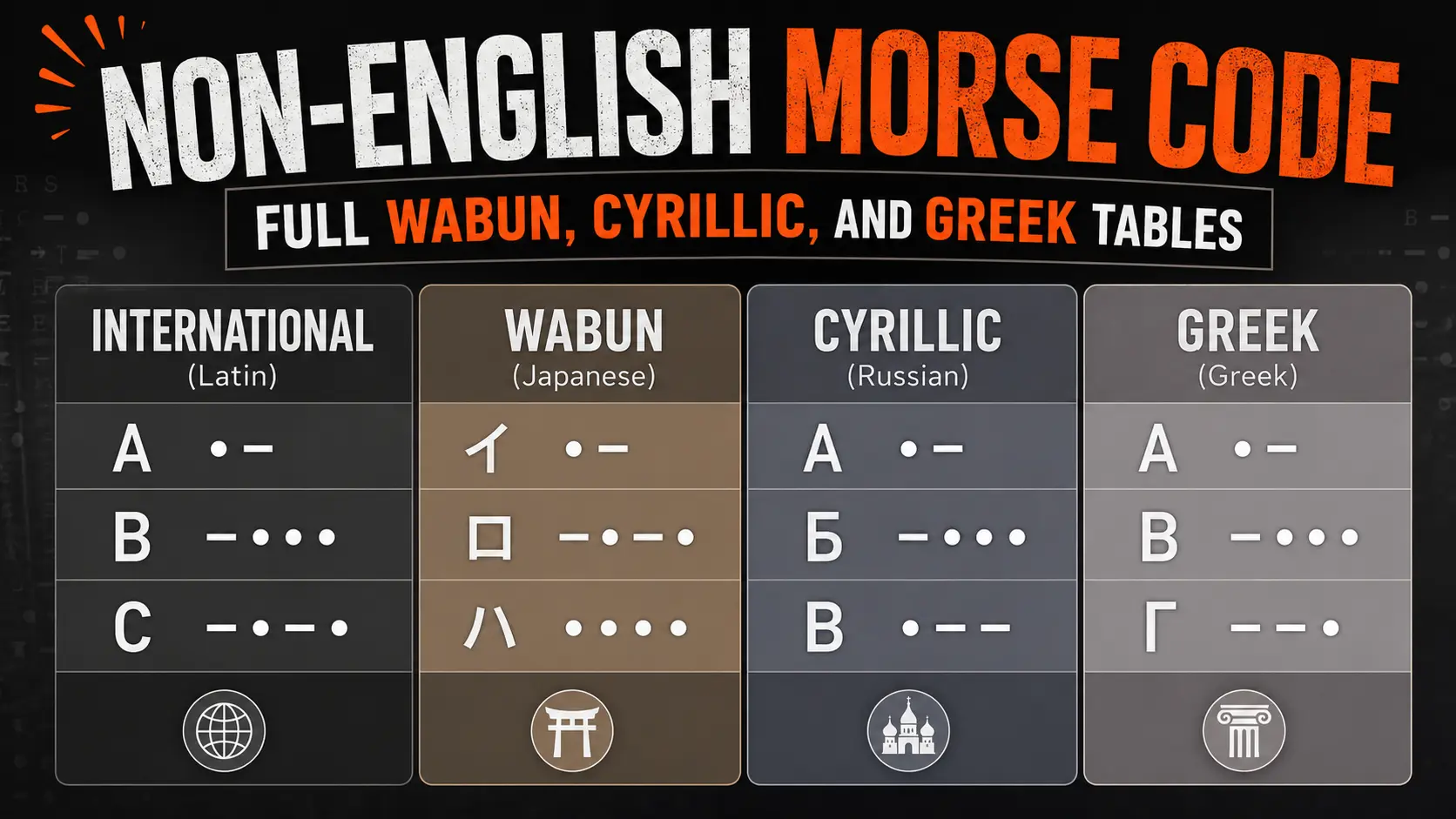
Non-English Morse Code: Full Wabun, Cyrillic, and Greek Tables

Comparison chart of Wabun, Russian Cyrillic, and Greek Morse code tables next to International Morse code

Morse code was built for the 26 letters of the Latin alphabet. That worked for English, but not for the many languages written in other scripts. So as the telegraph spread, separate Morse systems grew up for them. This page gives the full, clean code tables for three of the most important: Wabun for Japanese … Read more

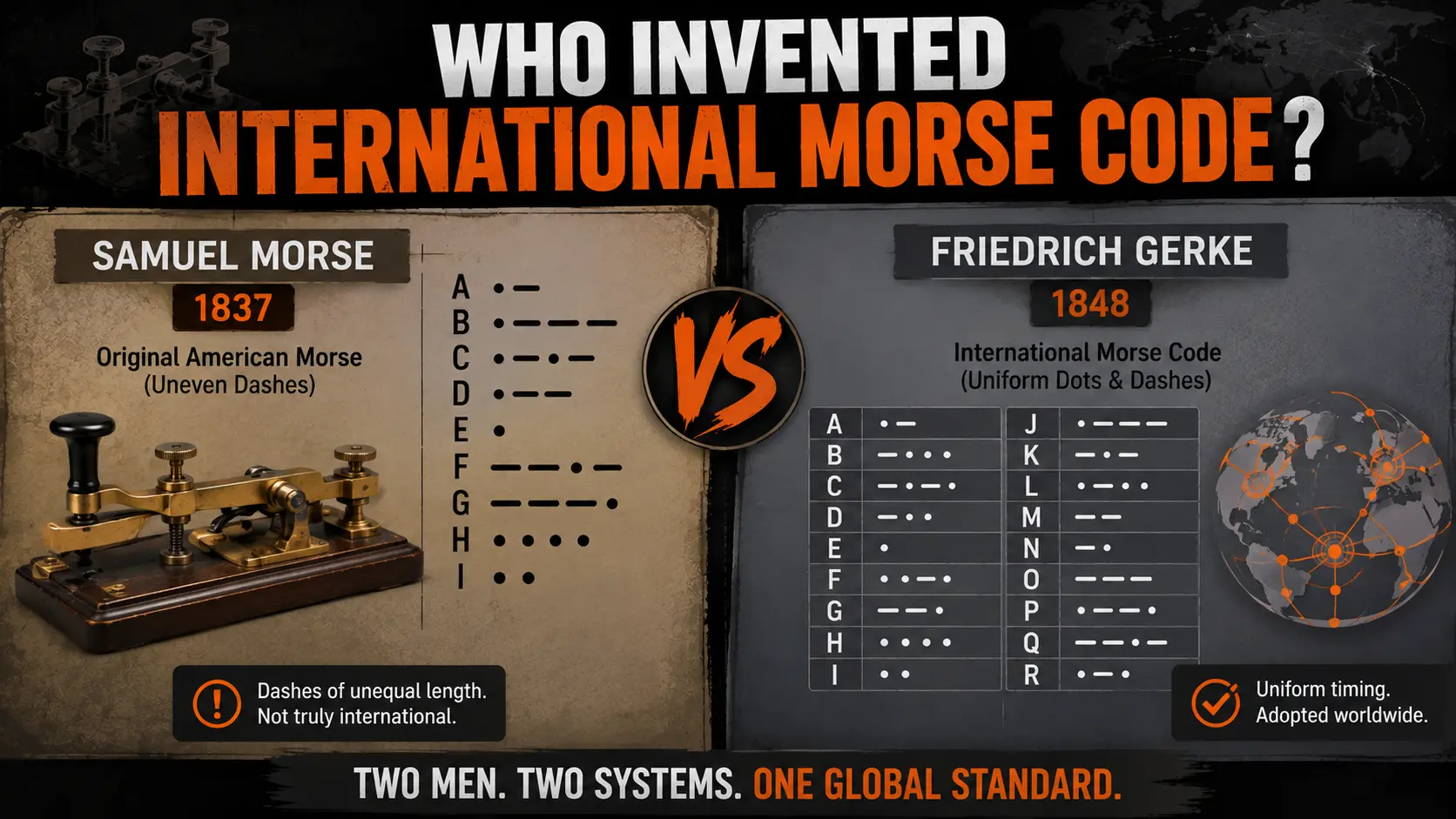
Who Invented International Morse Code? The Friedrich Gerke Story

Friedrich Gerke's 1848 Morse code rework next to Samuel Morse's original telegraph code

The code is named after Samuel Morse. The version you actually use today was mostly shaped by someone else, a German telegraph inspector named Friedrich Gerke. In 1848 he took the original American code apart and rebuilt it into the clean, two signal system that later became International Morse code. Here is who Gerke was, … Read more

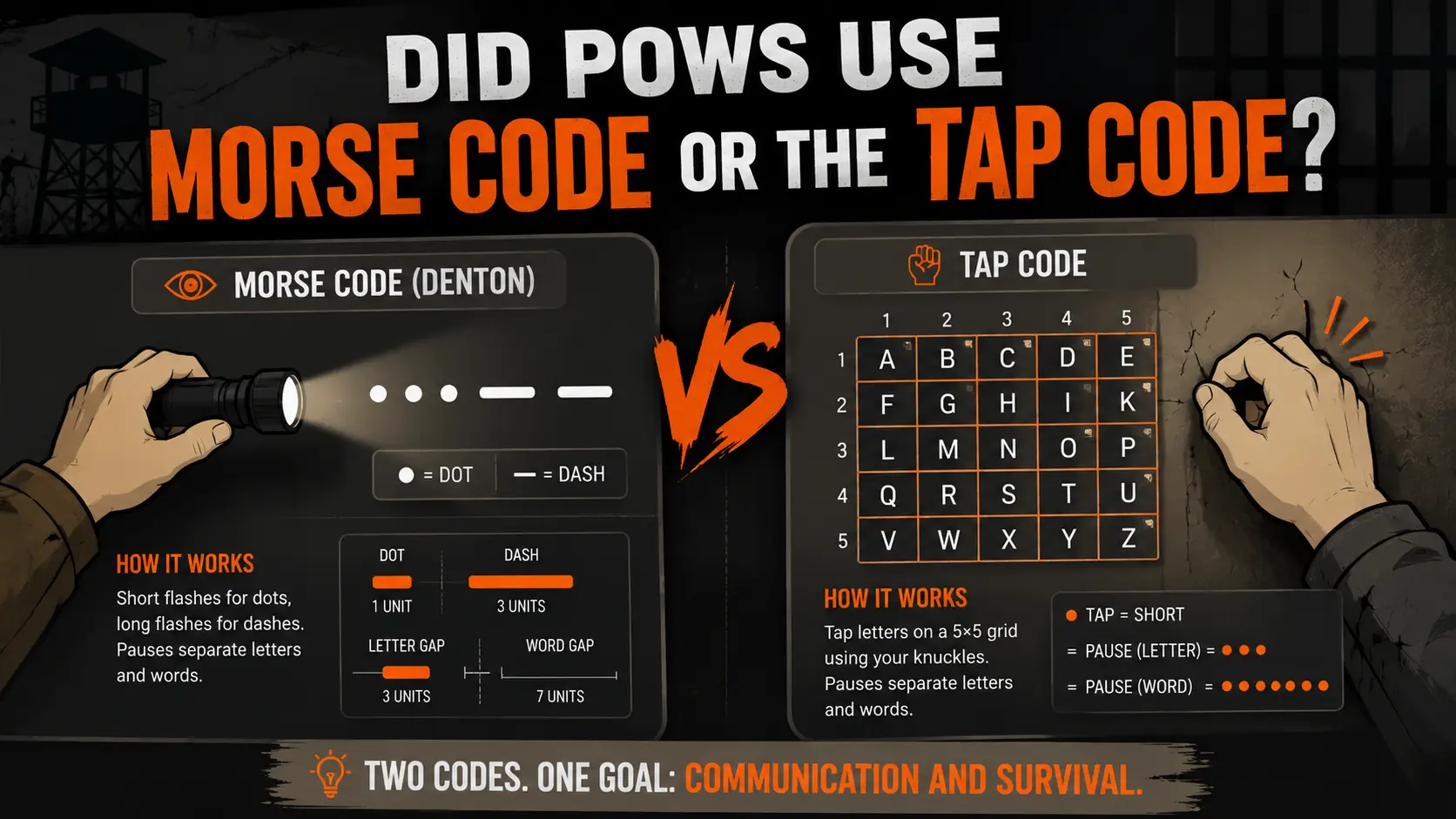
Did POWs Use Morse Code? The Truth About Morse and Tap Code

Illustration comparing Morse code dots and dashes with the POW tap code grid

Quick answer Morse code did reach prisoners of war, but not in the way films suggest. The most famous confirmed case is US Navy Commander Jeremiah Denton, who blinked the word TORTURE in Morse during a televised propaganda interview in Hanoi in 1966, giving American intelligence its first clear confirmation that POWs were being tortured. … Read more

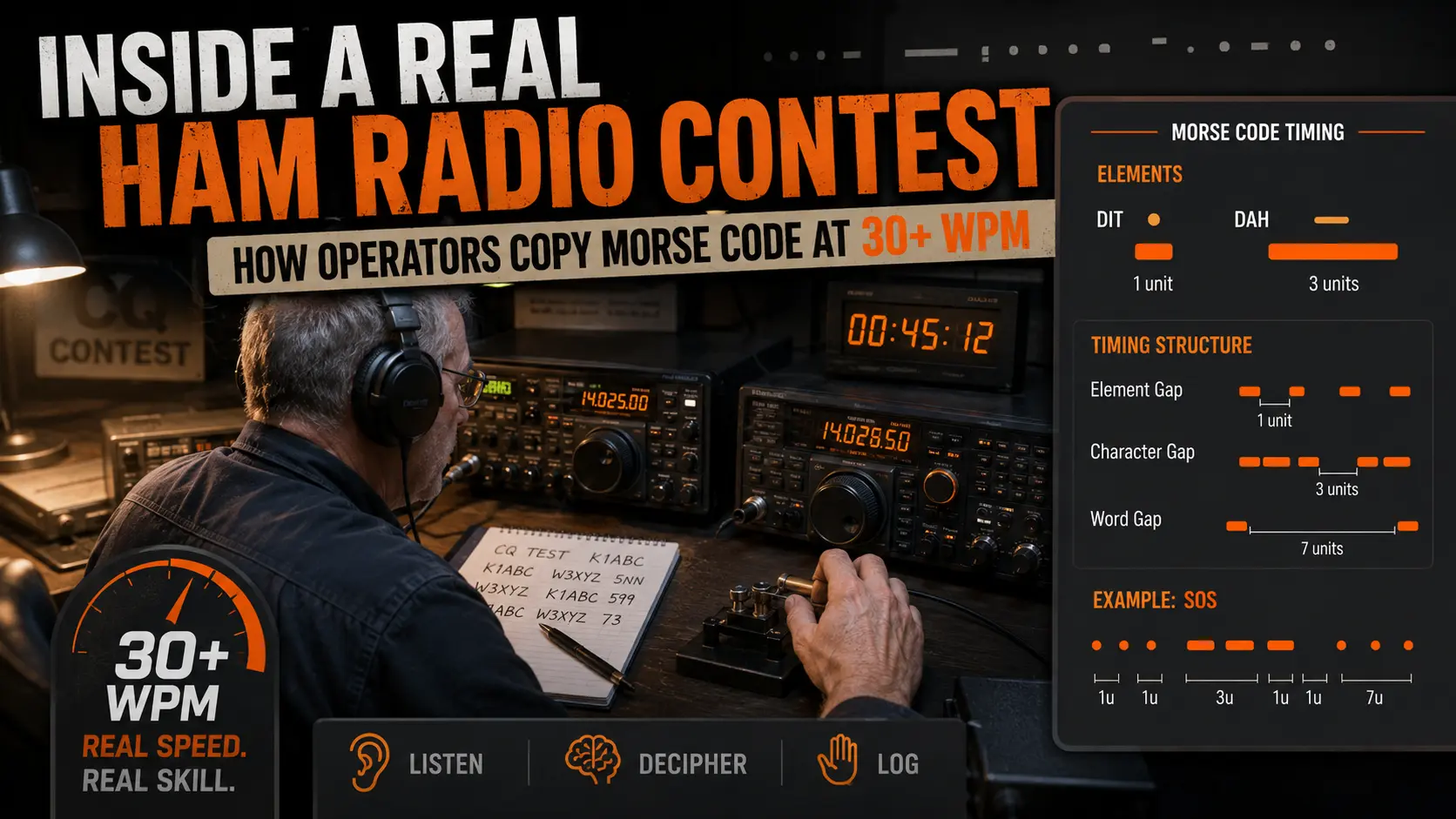
Inside a Real Ham Radio Contest: How Operators Copy Morse Code at 30+ WPM

Ham radio operator copying Morse code at 30+ WPM during a contest

Quick Answer: Morse code speed is measured in words per minute, and the “word” is a fixed reference rather than an average of real words. The two standard reference words are PARIS, which is exactly 50 time units long, and CODEX, which is 60 units. PARIS is the amateur radio standard and gives the formula … Read more

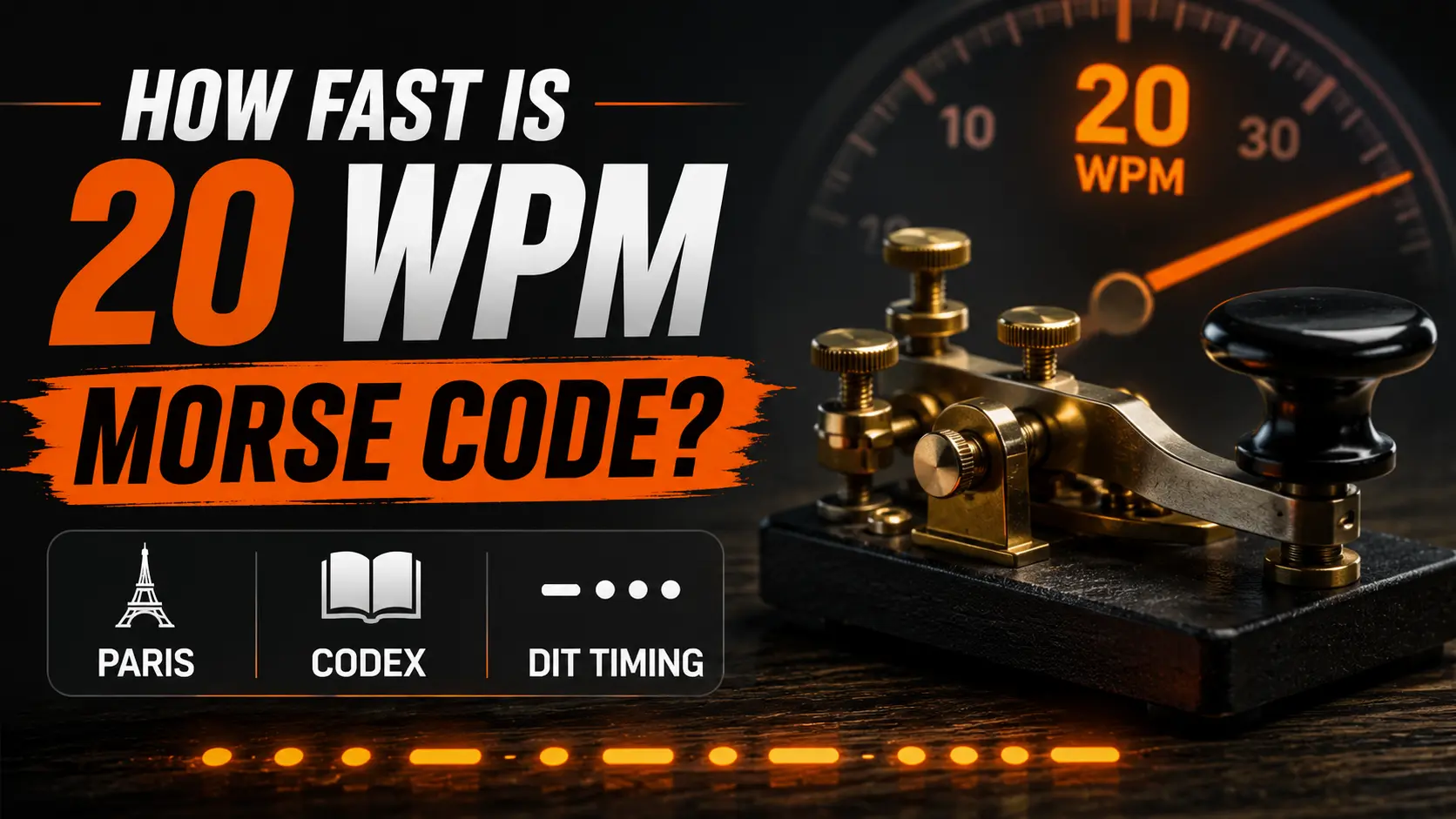
How Fast Is 20 WPM Morse Code? PARIS, CODEX & Dit Timing Explained

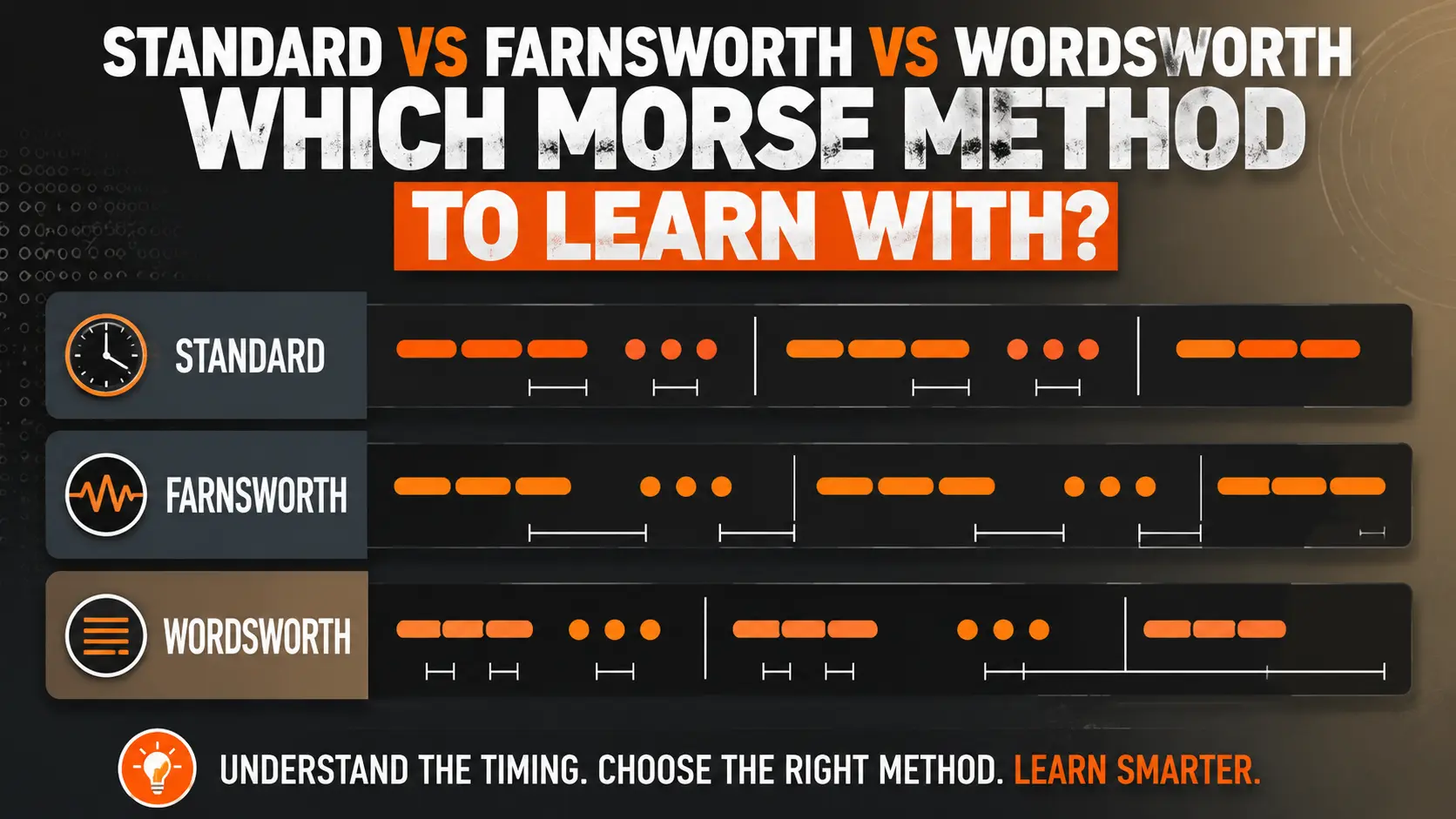
orse code timing diagram comparing PARIS and CODEX word standards with dot, dash, and gap units

Quick AnswerMorse code speed is measured in words per minute, and the “word” is a fixed reference rather than an average of real words. The two standard reference words are PARIS, which is exactly 50 time units long, and CODEX, which is 60 units. PARIS is the amateur radio standard: CODEX is used where the … Read more