Introduction: The World Before Morse Code Was Quiet, Slow, and Dangerous
There was a time when sending a message could take days, sometimes weeks.
No phones. No internet. No instant alerts.
A message traveled only as fast as a horse, a ship, or a human messenger. If something urgent happened, people often learned about it too late.
In wars, in storms at sea, and in emergencies, this delay was not just inconvenient. It was life-threatening.
Then a simple idea changed everything.
A system of dots and dashes called Morse code turned human language into electrical signals and made fast communication possible for the first time in history.
This is the true story of the History of Morse Code and how it reshaped the modern world.
To understand the system behind it, you can explore the Morse Code Alphabet and Morse Code Chart.
The Hidden Problem Before Morse Code
Before Morse code existed, communication had a serious limitation.
Electricity could travel fast, but human language could not.
Early telegraph systems could send signals, but they could not efficiently represent full sentences or structured language.
This created a gap between speed and meaning.
Samuel Morse solved this problem by compressing language into a simple system of timed signals.
Key idea: Morse code worked because it turned letters into short and long electrical pulses instead of written text.
Who Invented Morse Code and Why It Changed Everything
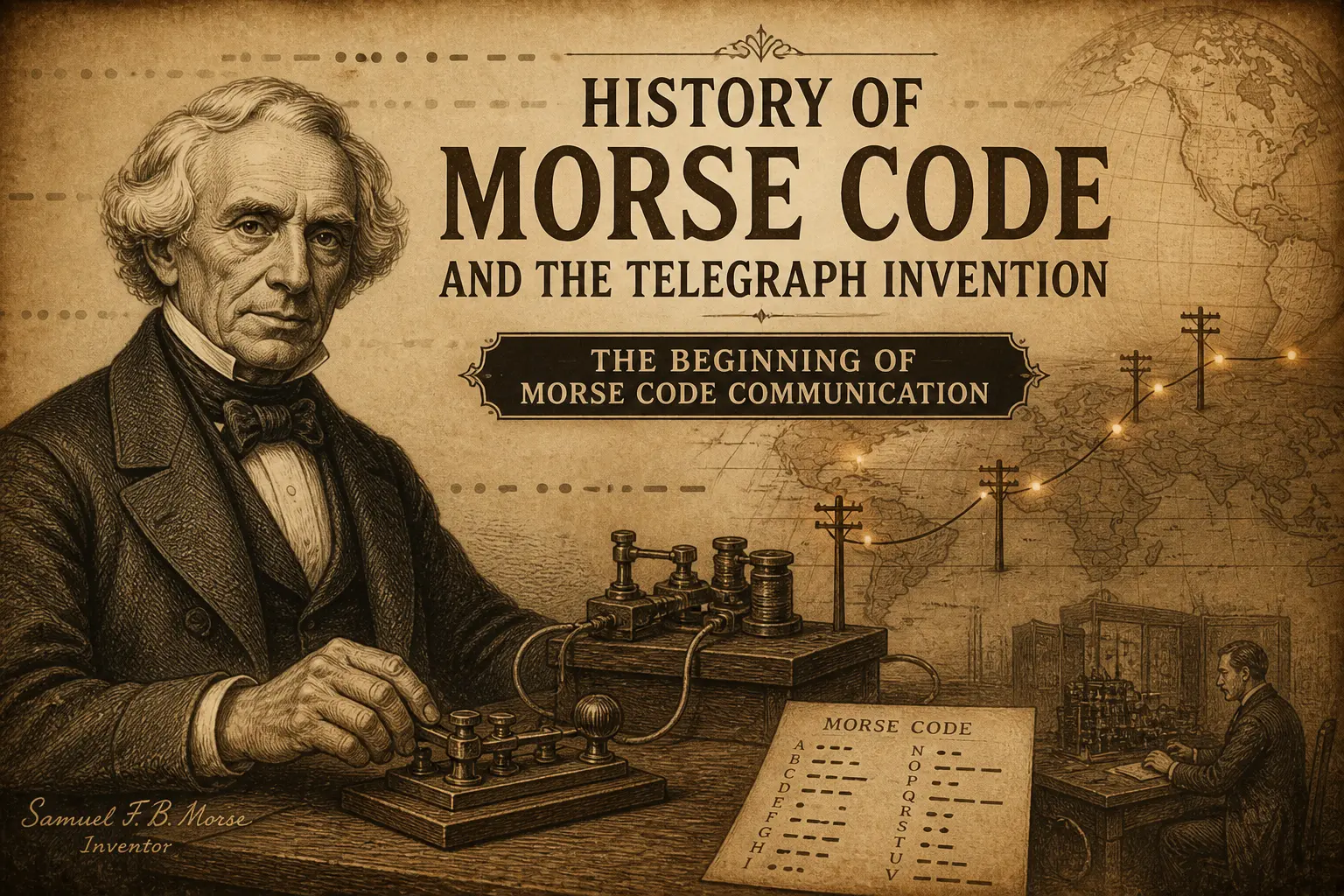
The Morse code system was developed in the 1830s and 1840s by Samuel Morse, an American inventor, along with Alfred Vail.
Morse was originally an artist, not a scientist.
But a personal tragedy changed his life completely.
While he was away from home, his wife became seriously ill and died before he could return. He received the news too late.
This painful moment made him realize something important.
Distance should never delay critical communication.
That realization led him to build a system that could send messages instantly over long distances using electricity.
This became the foundation of the telegraph and Morse code.
The Telegraph Breakthrough: Turning Electricity Into Language
The telegraph was one of the first technologies to use electricity for communication.
But Morse introduced a breakthrough idea.
Instead of sending full letters or complex signals, he simplified everything into two basic units:
- Short signals called dots
- Long signals called dashes
This simple structure made it possible to transmit language quickly, reliably, and across long distances.
Key fact: Morse code was the first system to convert human language into a structured electrical language.
The First Message That Started a Communication Revolution
On May 24, 1844, the first official telegraph message was sent from Washington, D.C. to Baltimore.
The message was:
“What hath God wrought”
At that moment, something historic happened.
Human communication was no longer limited by physical distance.
Messages could now travel faster than people could move.
This was the beginning of a global communication revolution.
How Morse Code Actually Works
Morse code assigns each letter and number a unique pattern of dots and dashes.
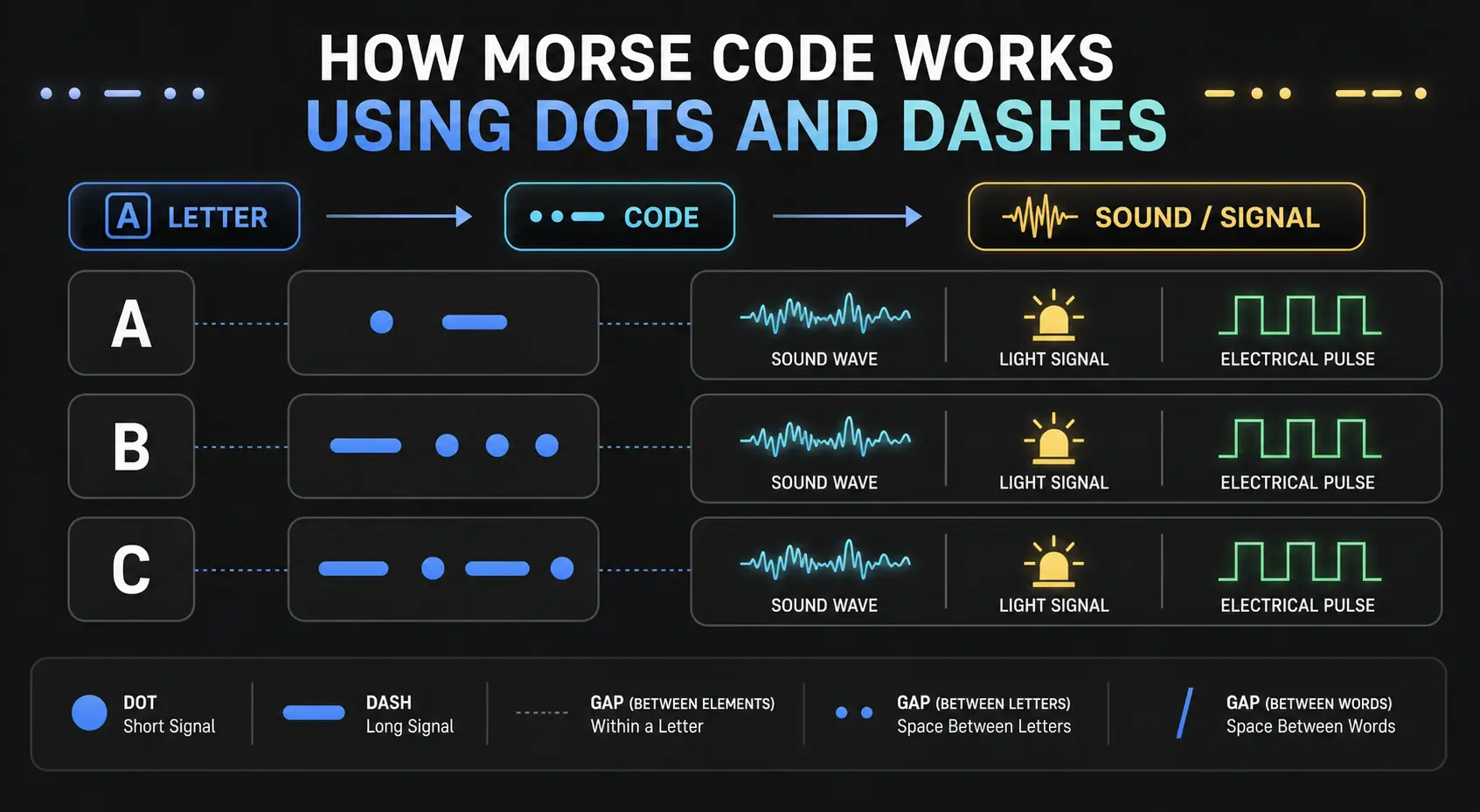
Example:
- A =
.- - B =
-... - C =
-.-.
These signals can be transmitted using sound, light flashes, or electrical pulses.
Operators learned to recognize patterns instantly, which allowed real-time communication even in difficult conditions.
You can try this system using Practice Morse Code Online or test messages with the Morse Code Translator.
Why Morse Code Changed the Entire World
Morse code did not just improve communication. It changed how the world functioned.
It introduced three major transformations:
1. Speed of communication
Messages traveled faster than physical transport for the first time.
2. Reliability across distance
Communication worked across countries, oceans, and remote areas.
3. A universal system
Language was converted into a shared electrical code.
Railways, shipping companies, newspapers, and military systems all adopted it quickly.
Key fact: Morse code made it possible for information to move faster than human travel for the first time in history.
Morse Code in Wars, Ships, and Life-or-Death Moments
Morse code became one of the most important communication tools in dangerous situations.
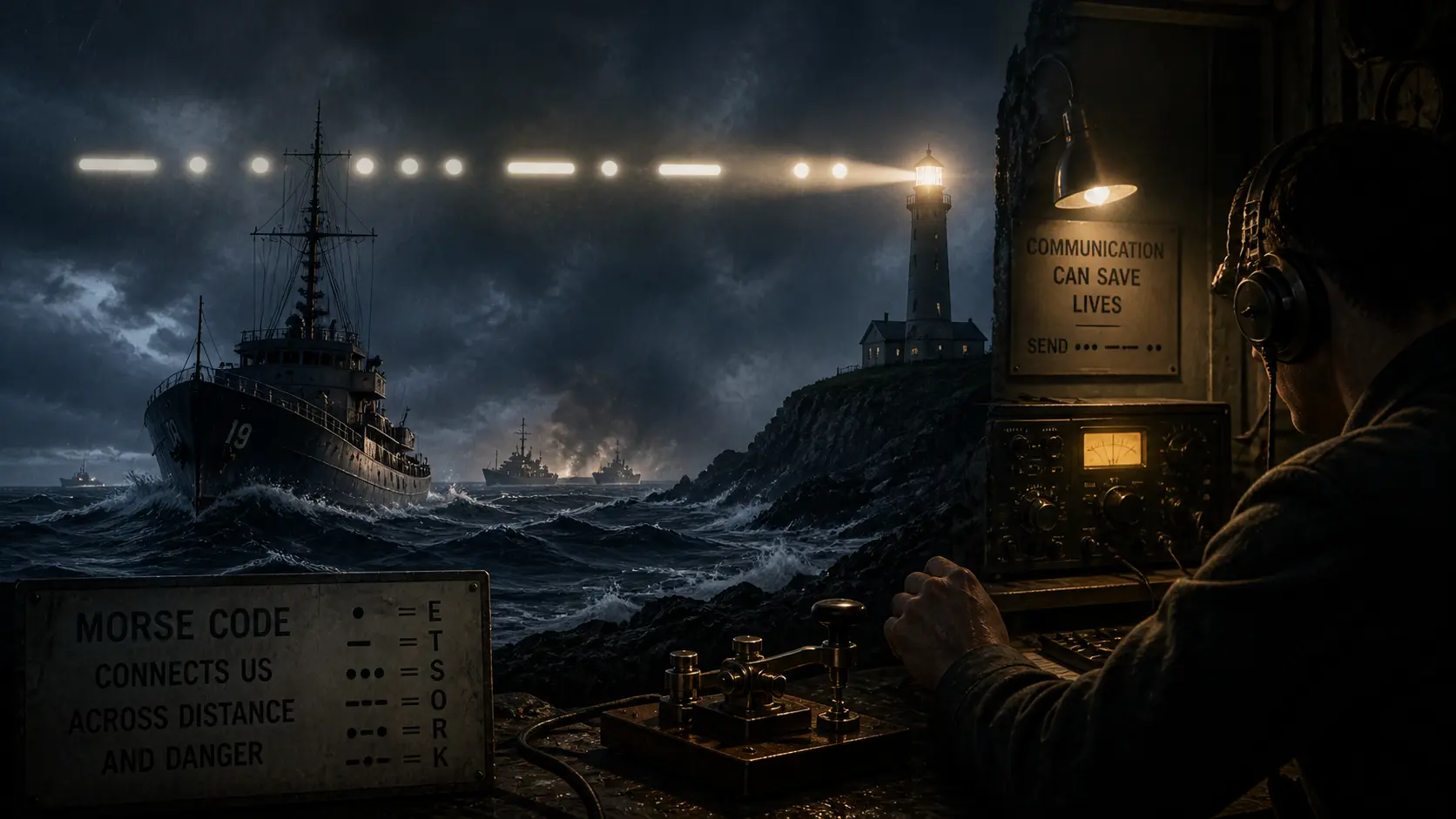
In wars, it allowed armies to send urgent and secret messages across long distances.
At sea, ships relied on it when no other communication system worked.
In storms, crashes, and emergencies, Morse code became a silent lifeline.
One of the most powerful signals ever created is SOS, a universal distress call used to request immediate help.
Learn more here: SOS in Morse Code
Key fact: In many real emergencies, Morse code was the only system that continued working when others failed.
The Decline of Morse Code
With the invention of the telephone, radio, television, and later the internet, communication became faster and easier again.
Morse code slowly disappeared from everyday use.
But it never fully died because it remained useful as a backup system in critical situations.
Does Morse Code Still Matter Today?
Yes, Morse code is still used today in specific fields where reliability matters more than speed or convenience.
It is used in aviation, amateur radio, military training, and emergency communication systems.
It is especially valuable when modern systems fail or are unavailable.
Explore tools like Morse Code Machine and Audio to Morse Code.
Why Morse Code Still Matters in the Digital Age
Morse code is more than a historical system.
It represents a foundational idea in communication technology.
Complex language can be reduced into simple signals that machines can understand and transmit.
This idea influenced early computing and modern digital communication systems.
Key fact: Morse code was one of the earliest systems to translate human language into machine-readable signals.
Timeline of Morse Code History
- 1830s: Early experiments in electrical communication begin
- 1840s: Morse code and telegraph system developed
- 1844: First official message sent
- Late 1800s: Global adoption across industries
- 1900s: Heavy use in wars and maritime communication
- Modern era: Backup communication system still in use
Frequently Asked Questions
Morse code is still used in aviation, emergency communication, and amateur radio where reliable backup communication is needed when modern systems fail.
It was developed by Samuel Morse and Alfred Vail in the 1830s and 1840s as part of the telegraph communication system.
It allowed messages to travel instantly over long distances for the first time, changing war, trade, shipping, and global communication forever.
Yes, it is still used in aviation, military backup systems, and emergency communication because it works even without advanced technology.
Conclusion: A Simple Idea That Changed the Entire World
The History of Morse Code is the story of how a simple idea reshaped human communication forever.
It turned language into signals, reduced distance as a barrier, and created the foundation for modern communication systems.
Even in today, Morse code remains a powerful reminder that simple systems can have the biggest impact on human history.
